
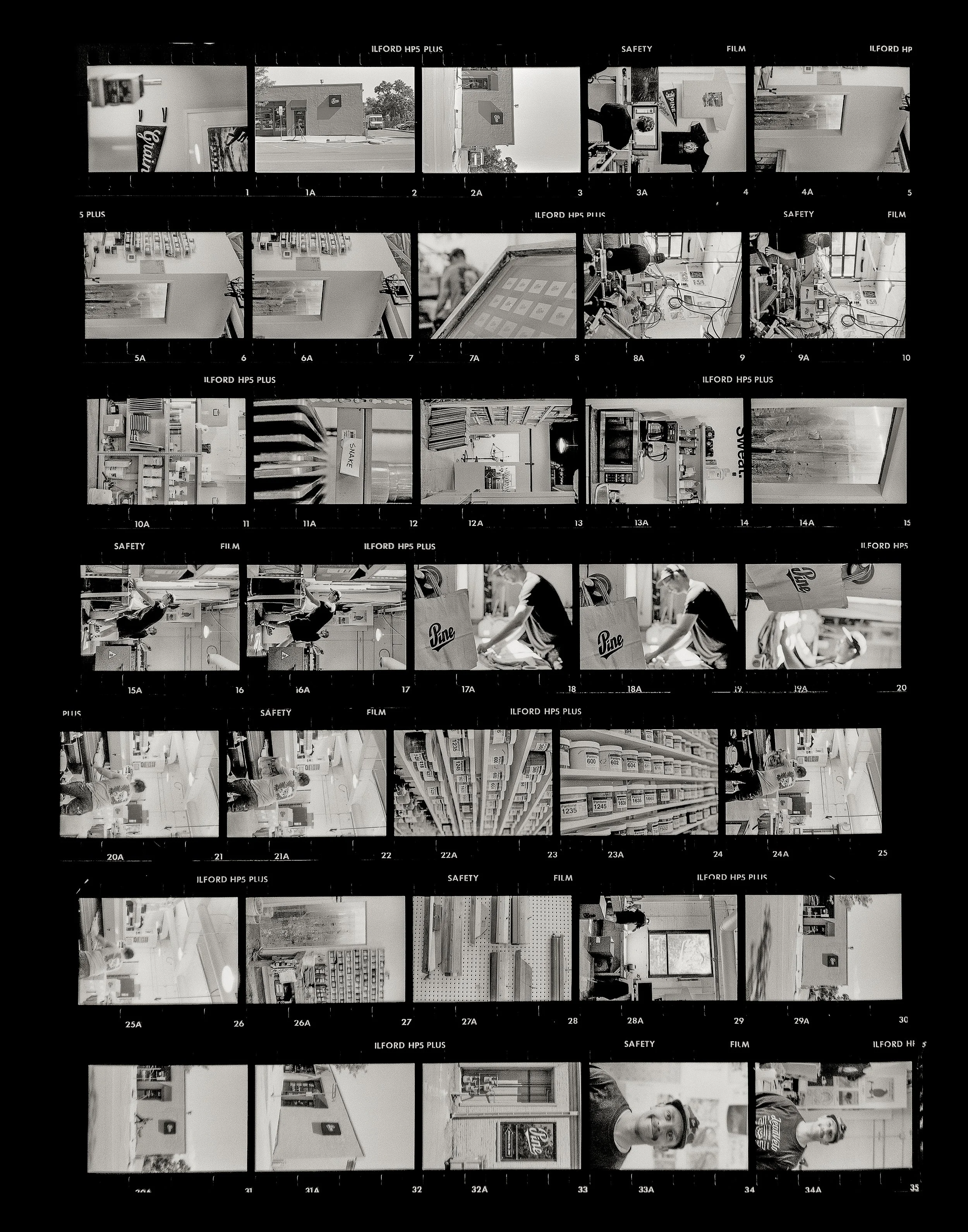
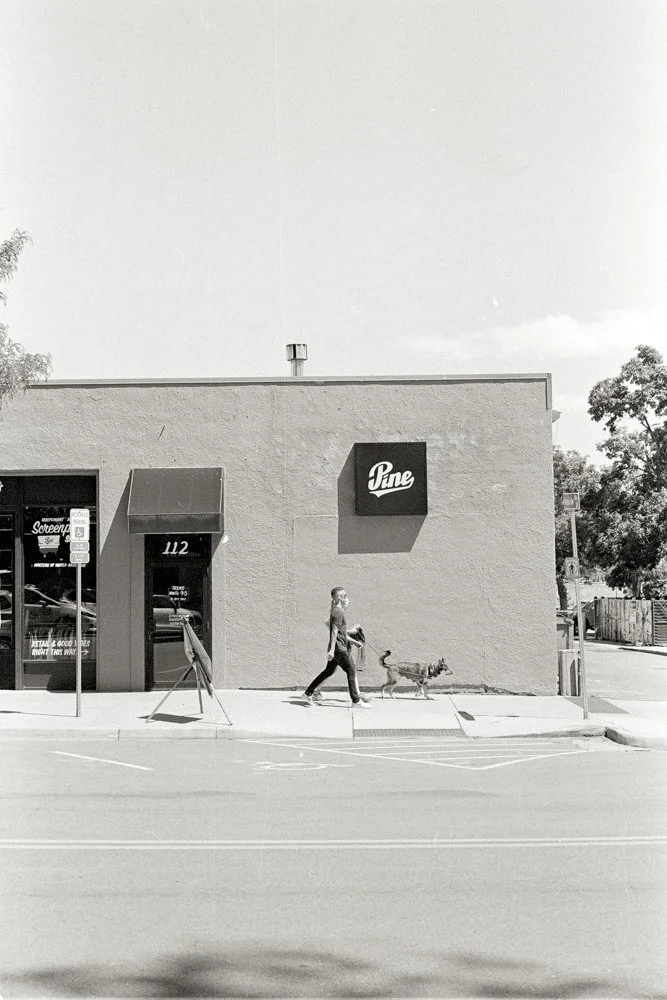
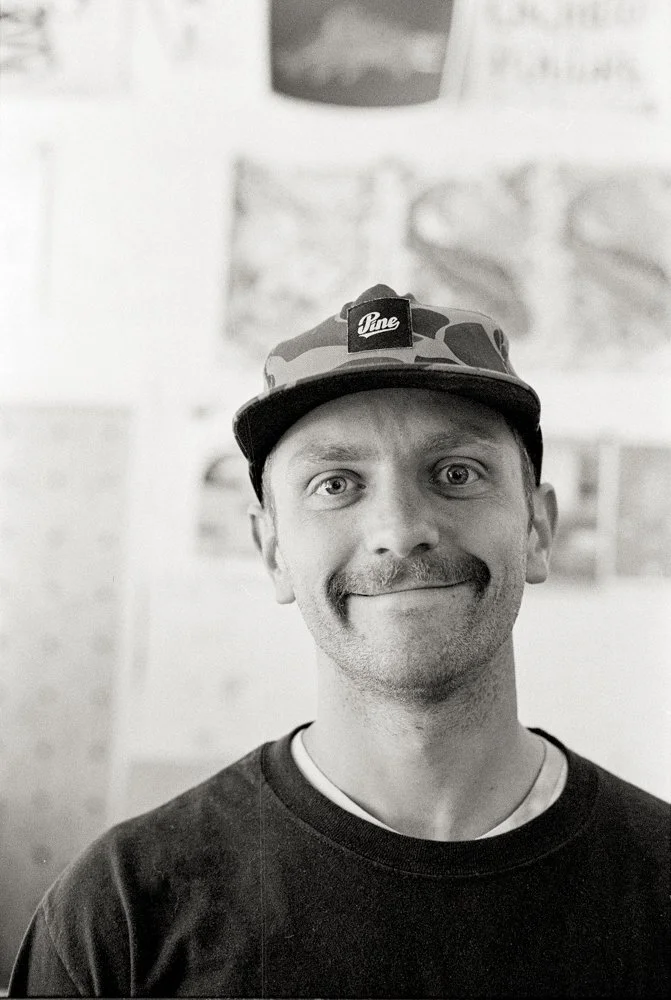
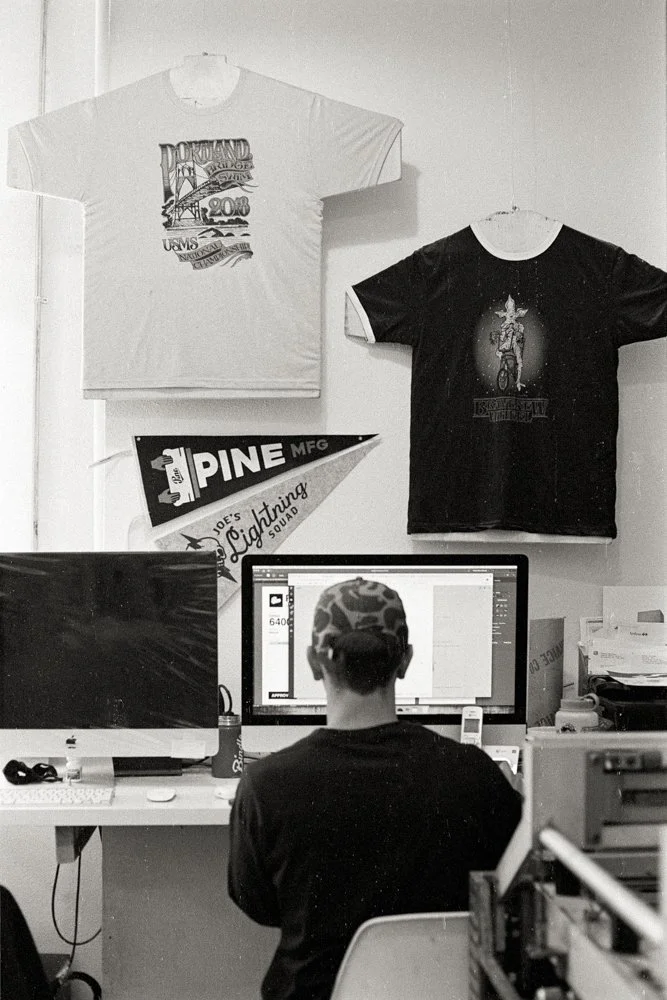
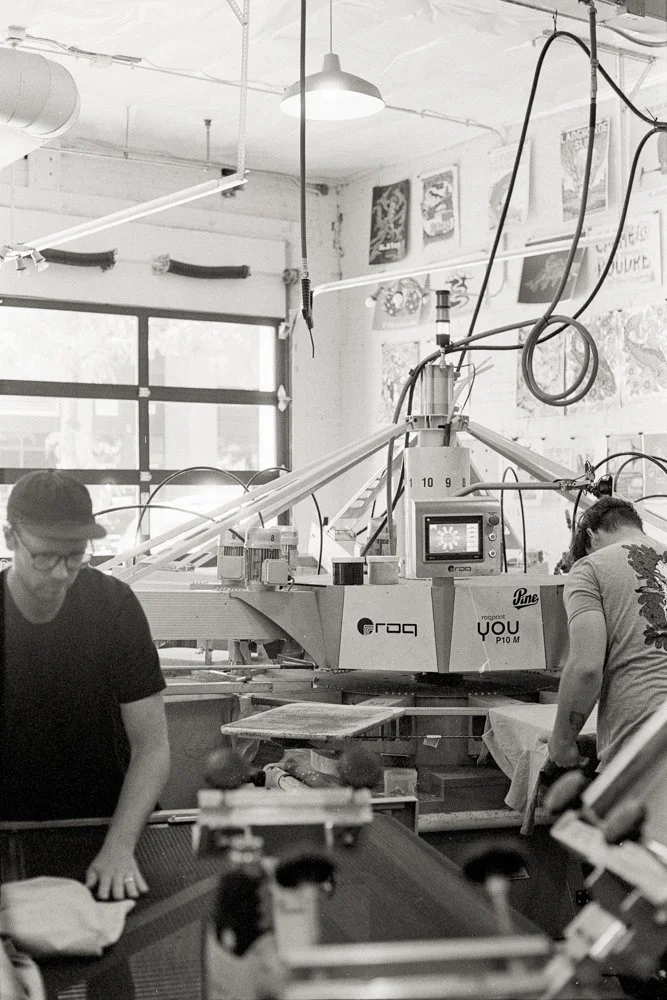
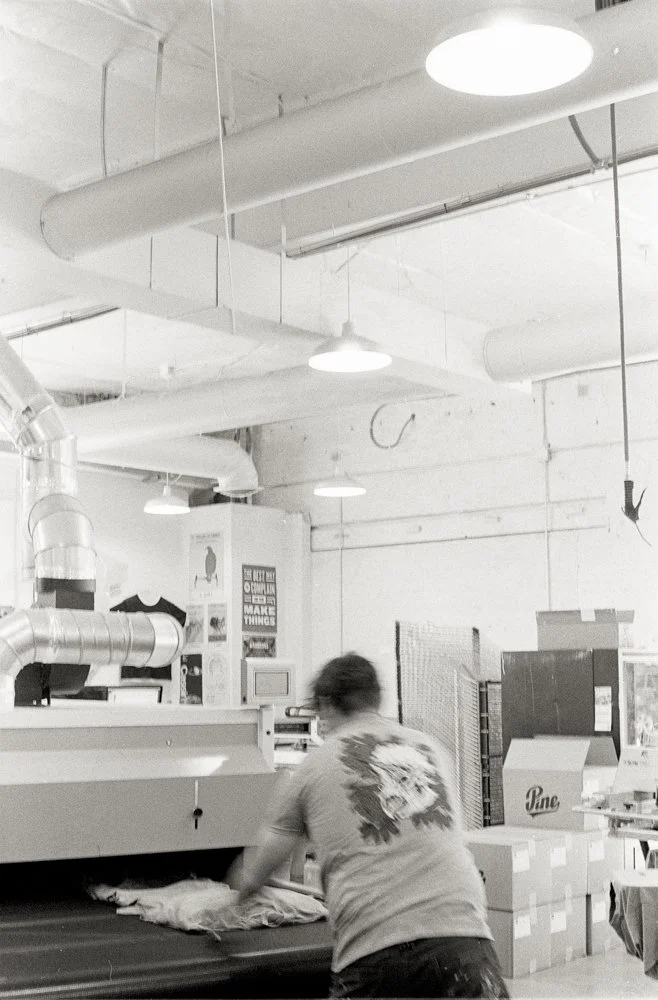
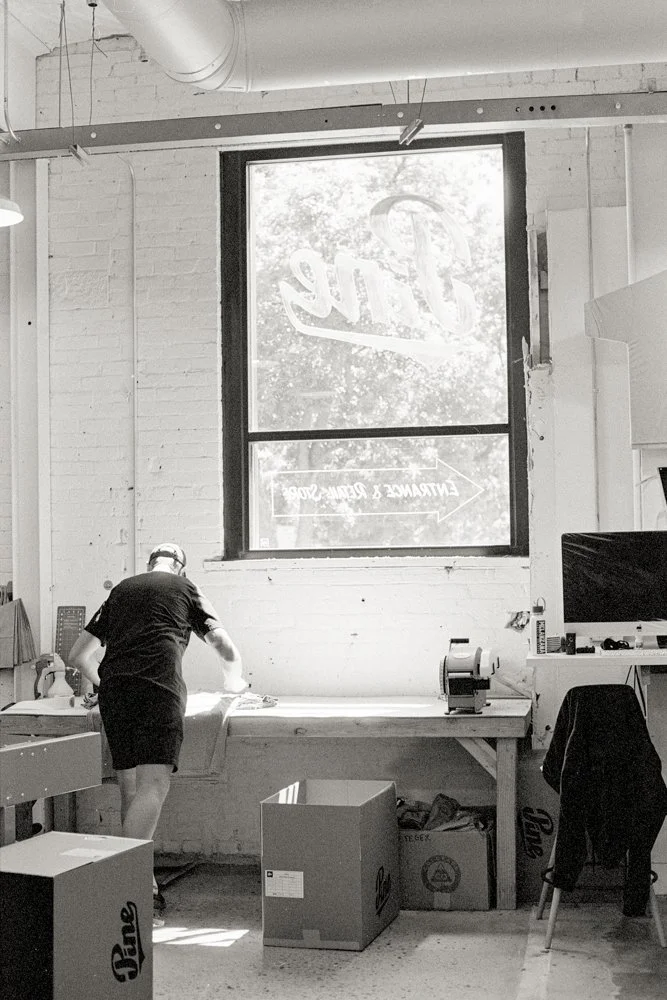
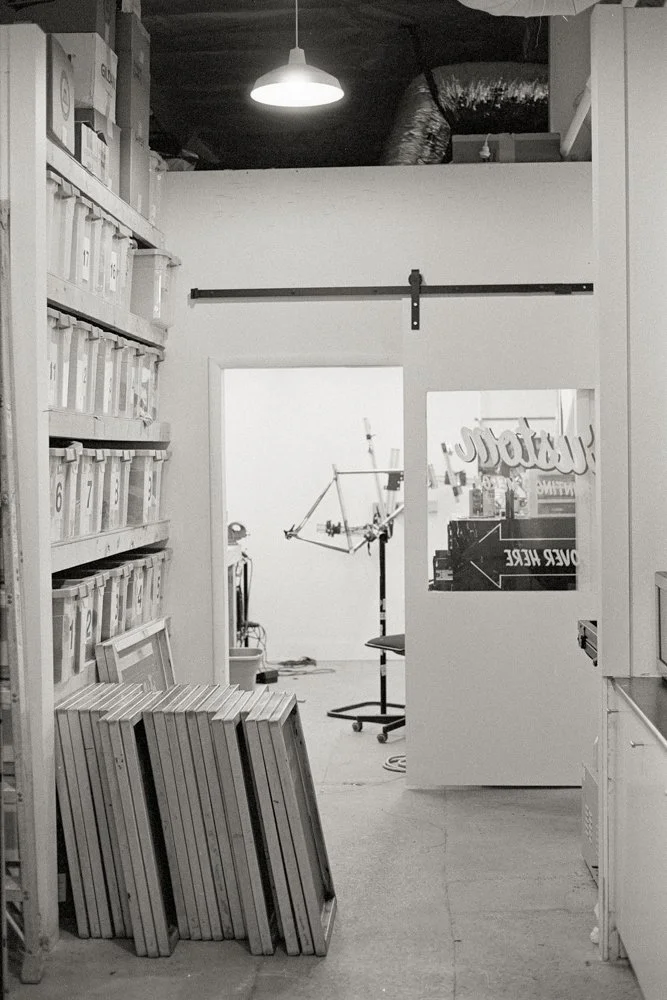
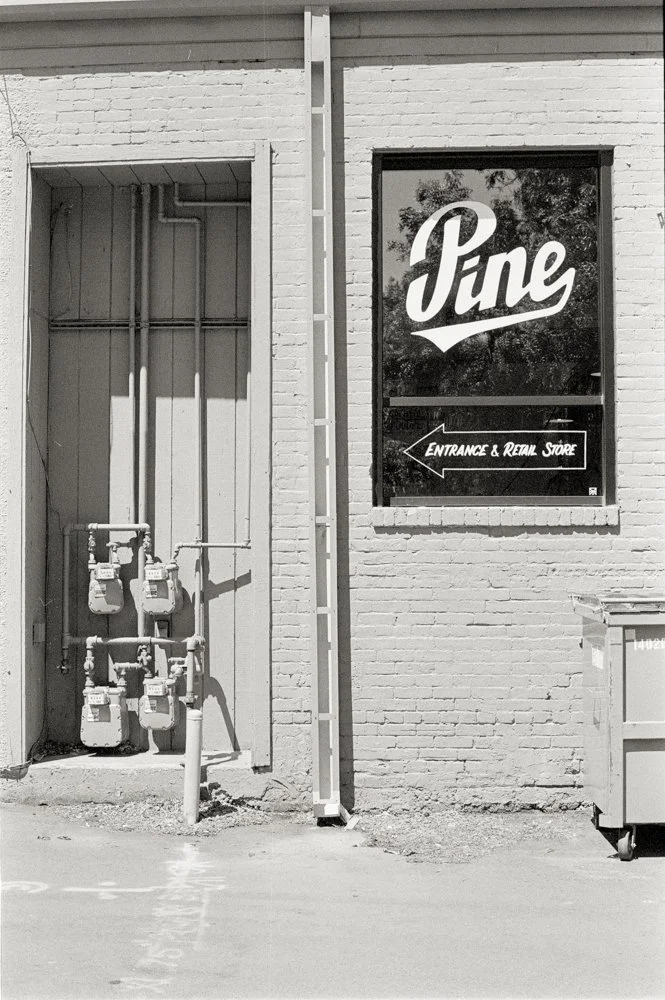
I spent a day at Pine documenting the shop, the people, and the process.
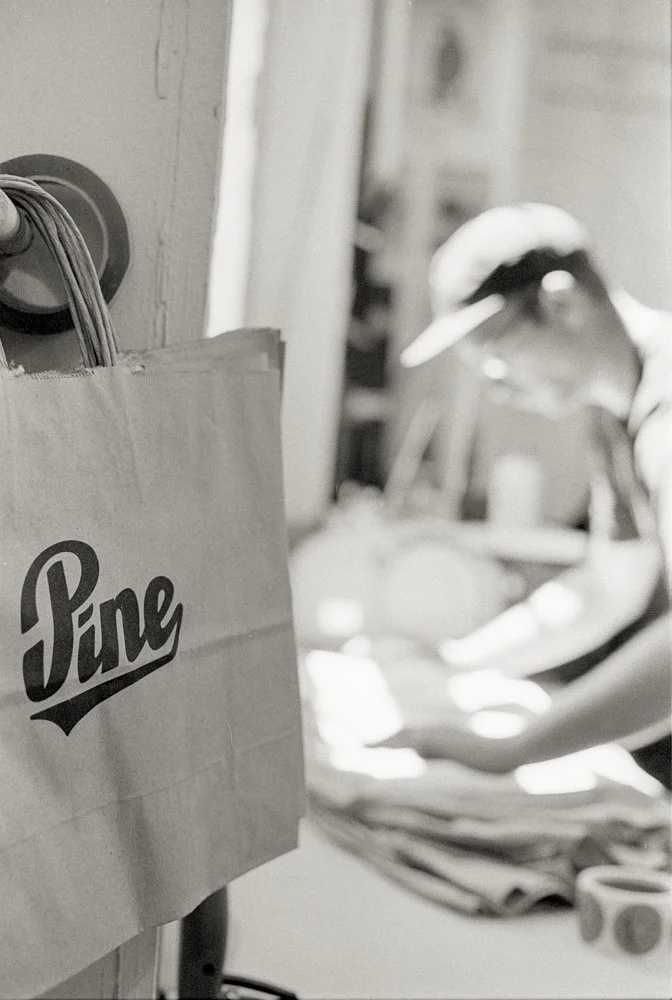
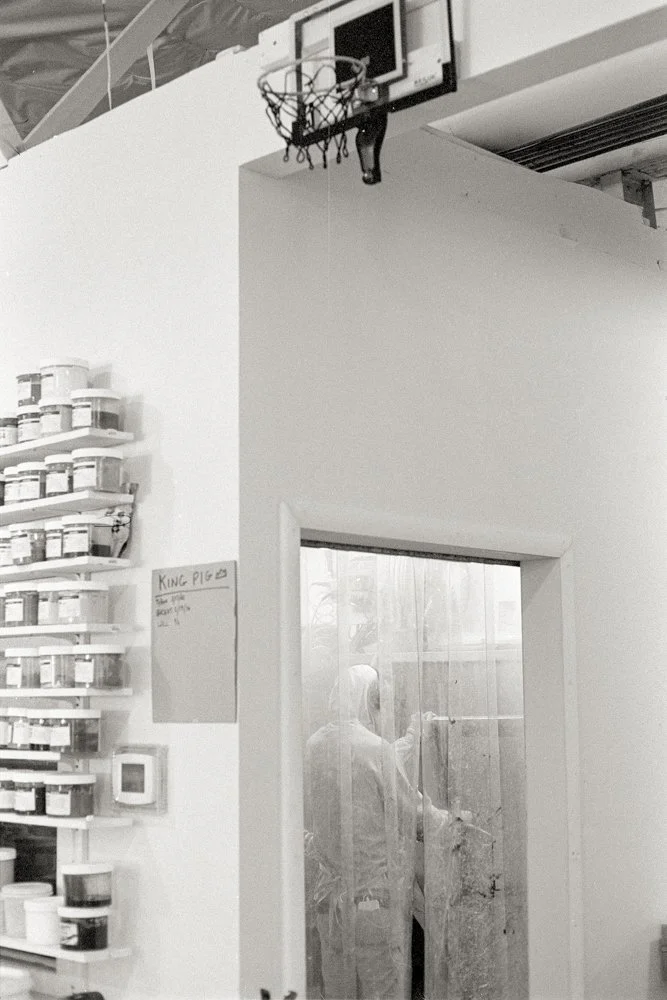
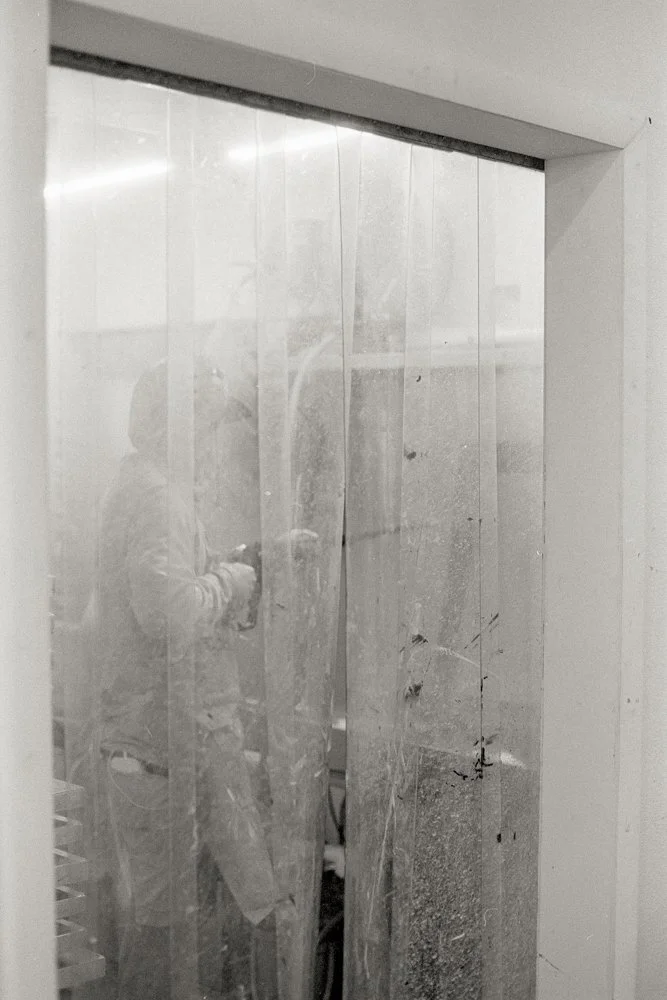
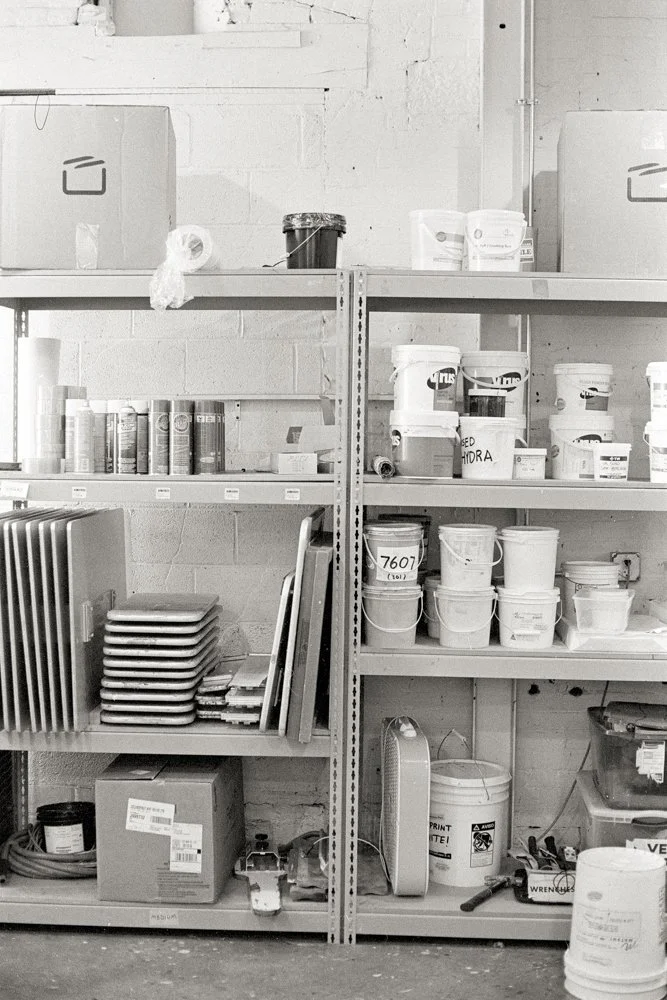
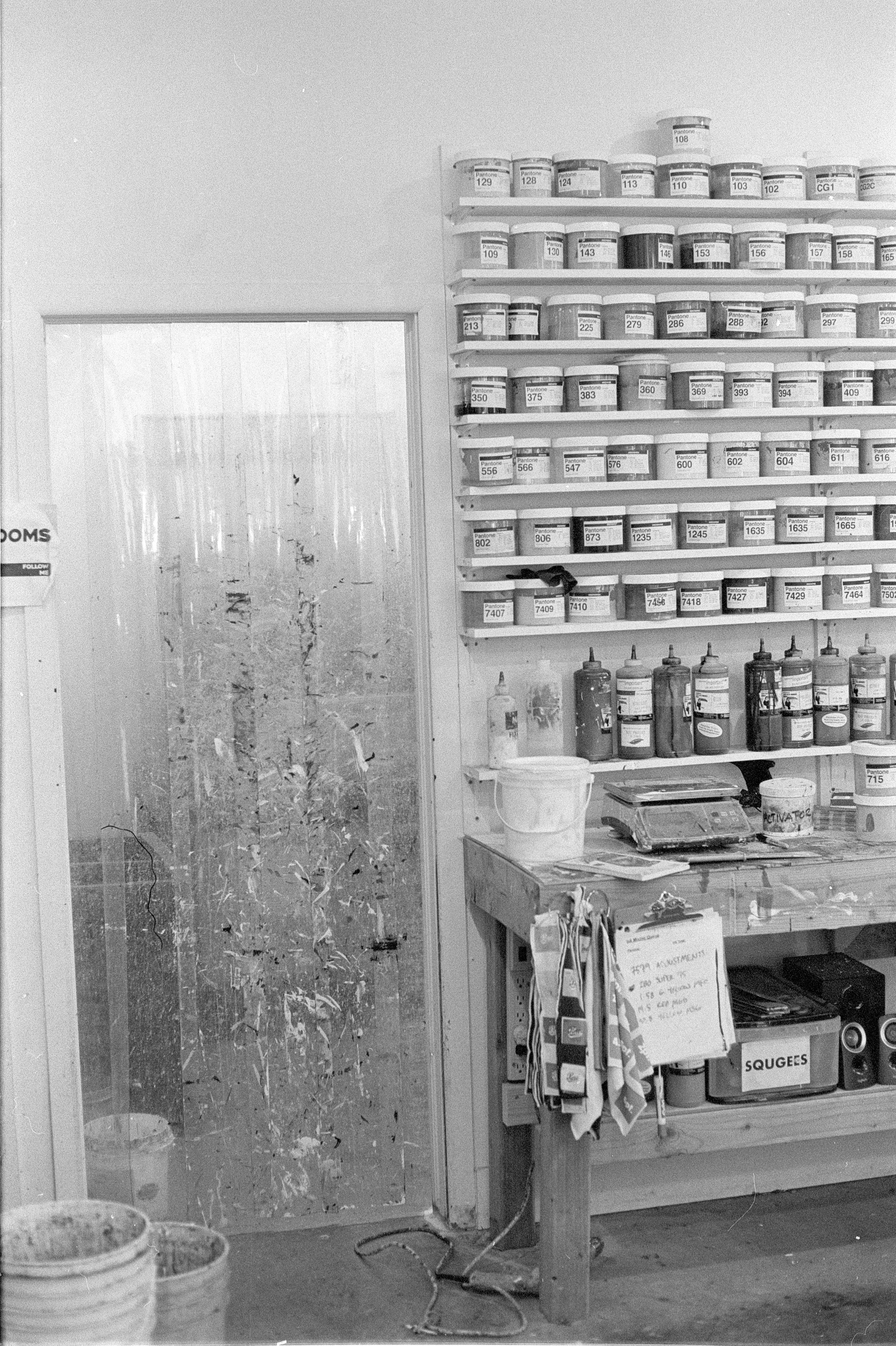
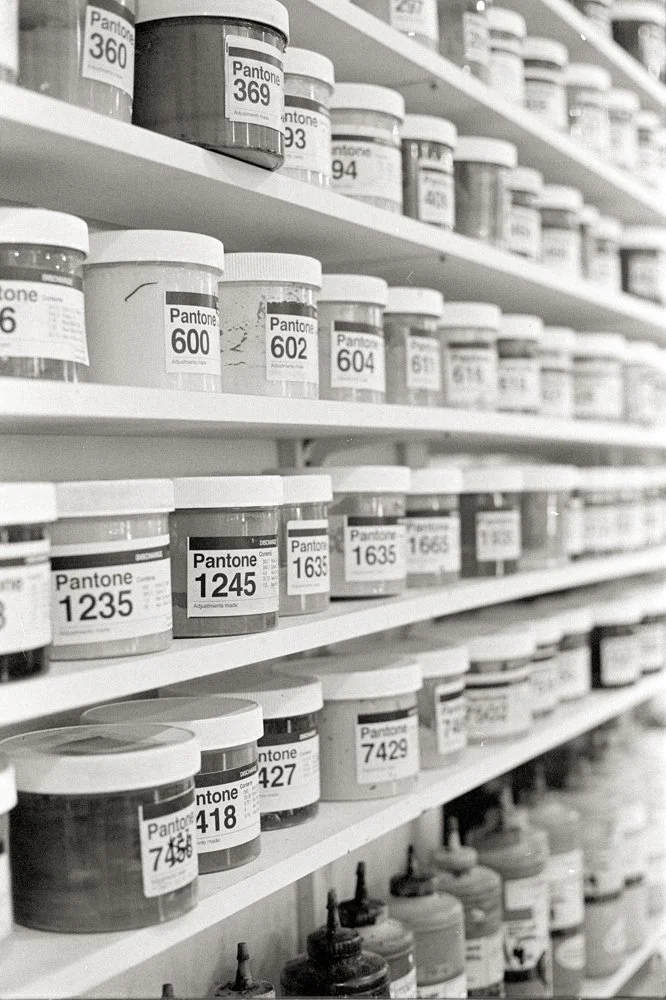
Pine is a local print shop that I’ve used for merch in the past, along with a lot of other small businesses around town. I knew there would be plenty to look at. The moving arms of the presses, the wall of inks, the screen washing room, shelves of tools and supplies, and stacks of boxes with the Pine logo all had their own visual rhythm.
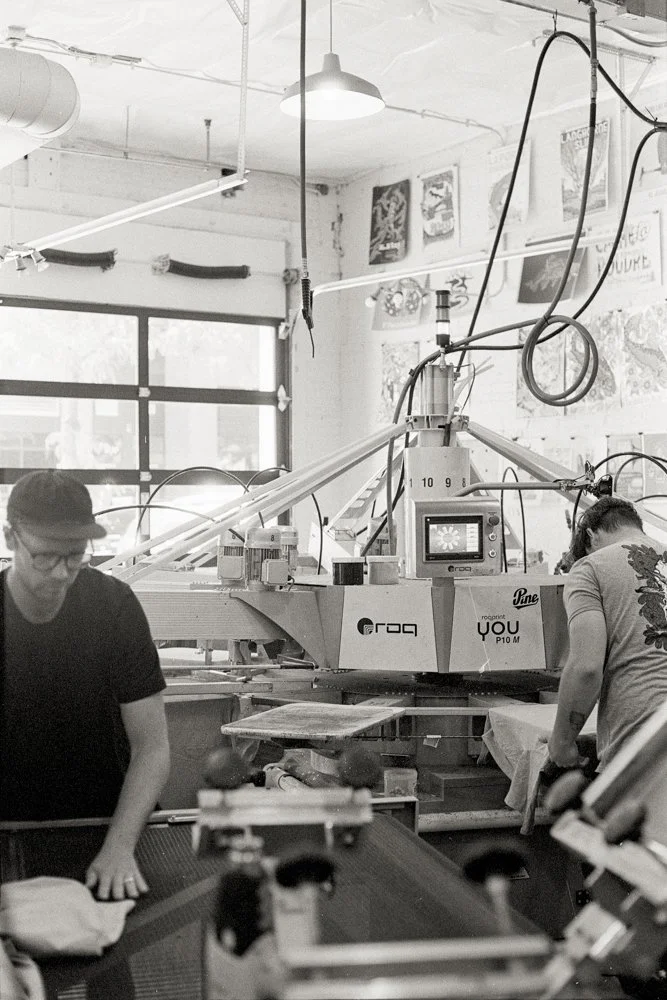
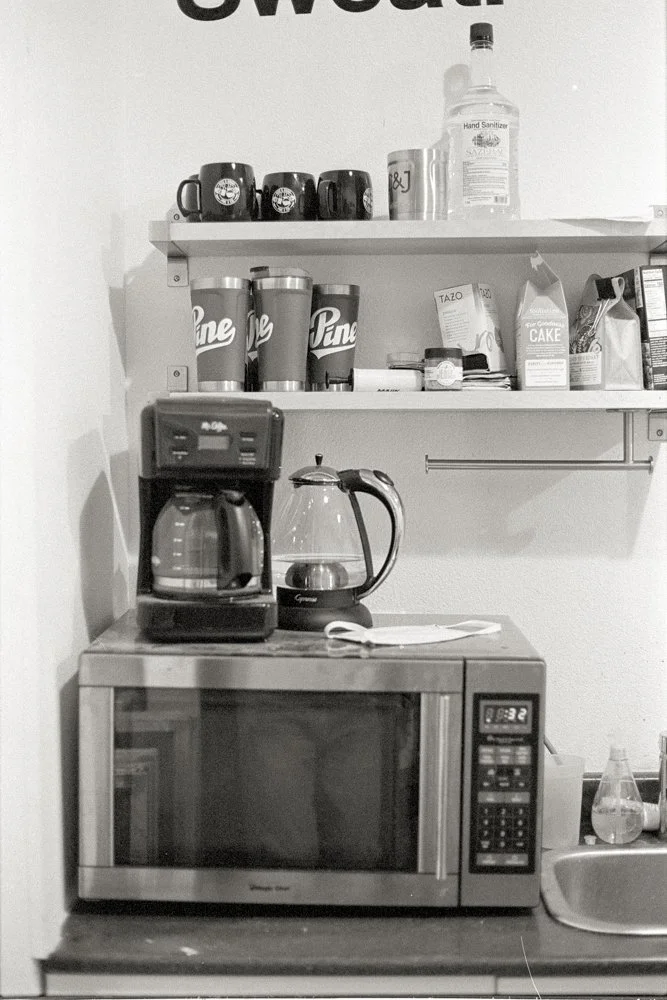
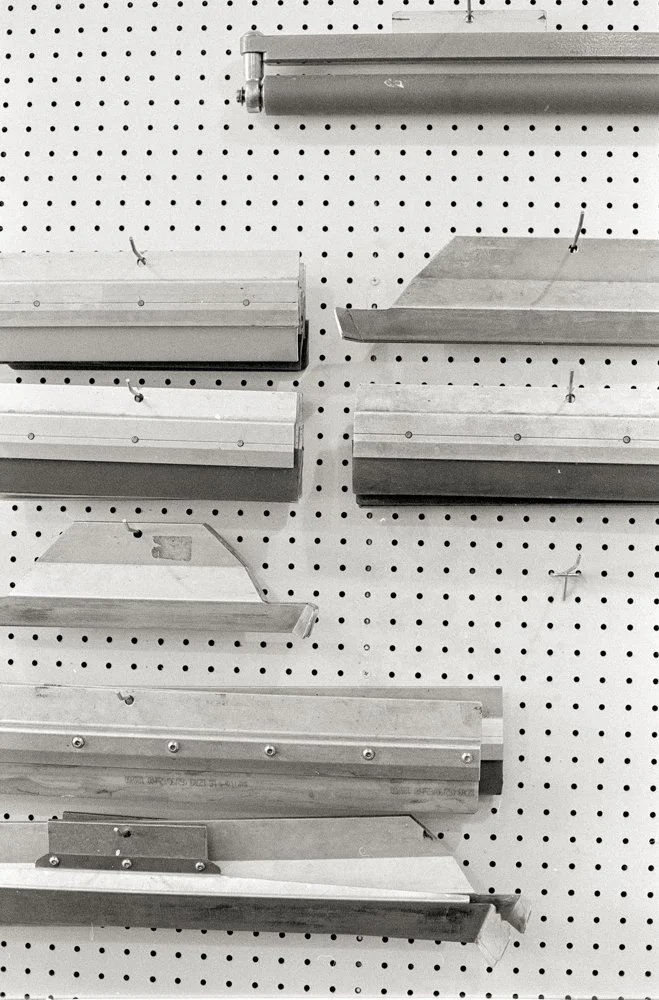
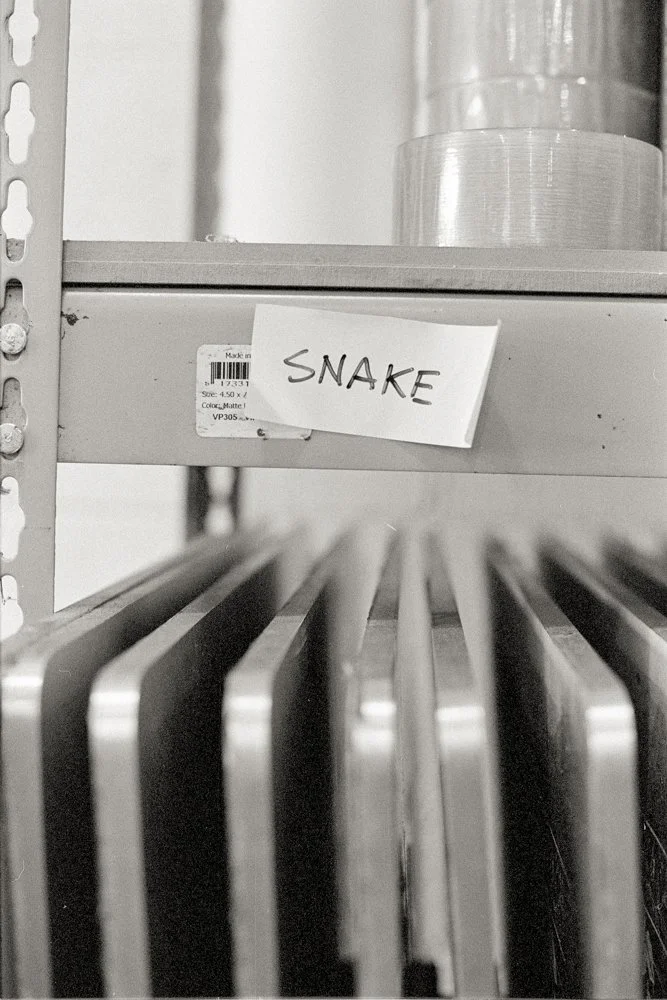
I shot Super 8 throughout the shop, mostly following the machinery and people working. I also walked around with a 35mm camera, looking for the smaller things that make up the place: coffee cups on a shelf, a bicycle frame being built in the back room, a little basketball hoop with a running game of “King Pig,” and rows of squeegees hanging from pegboards.
For sound, I carried a small cassette recorder with a directional dynamic microphone. I recorded an interview with the owner along with the sounds of the shop: squeegees moving across screens, press arms and actuators, the pressure washer, and the CTS wax jet printer moving back and forth.
The film follows the process from the surrounding area into the shop, then through the machinery and the people working, before arriving at the owner and his story. The 35mm photographs are also worked into the film alongside the Super 8 and recorded sound.
The interview was an early lesson. I went in without much preparation and tried to come up with questions as I went. I was nervous and was essentially pulling questions out of the air. I prepare much more carefully now.
Generally speaking, I try to shoot each project on one roll of 35mm and one roll of Super 8. I was very conscious of not getting in anyone’s way, which made me a little too passive and led to more wandering than I would do now. These days I’m more deliberate about what I’m looking for before I start shooting.
After the interview, I realized I still needed a shot on the super 8 of the owner inside the shop. I pulled out the Super 8 camera and started filming and the red light in the viewfinder started flashing.
Out of film.
When I got the scan back, I had only managed to capture two frames of him before the end of the roll. In the edit, I duplicated and reversed those two frames, rendered it as a new clip and copied that new clip a few times on the timeline to create a few seconds of movement. It kind of feels like the old boomerang effect on instagram.
It wasn't the shot I planned for, but it worked out just fine.
A lot of what I’m interested in is present in this project: paying attention to the process, looking for the small details, recording the sounds of a place, and bringing different kinds of analog material together into one document.
Technical Details:
Super 8: Camera Minolta XL601 Film Kodak 200T Process+Scan Pro8mm
35mm: Camera Canon EOS 3 Film Ilford HP5 Process HC110B
Audio: Recorder Jensen MCR-75 Cassette Recorder Mic Movo VXR10